What is Synthetic cfDNA and Why Does it Matter for NIPT Validation?
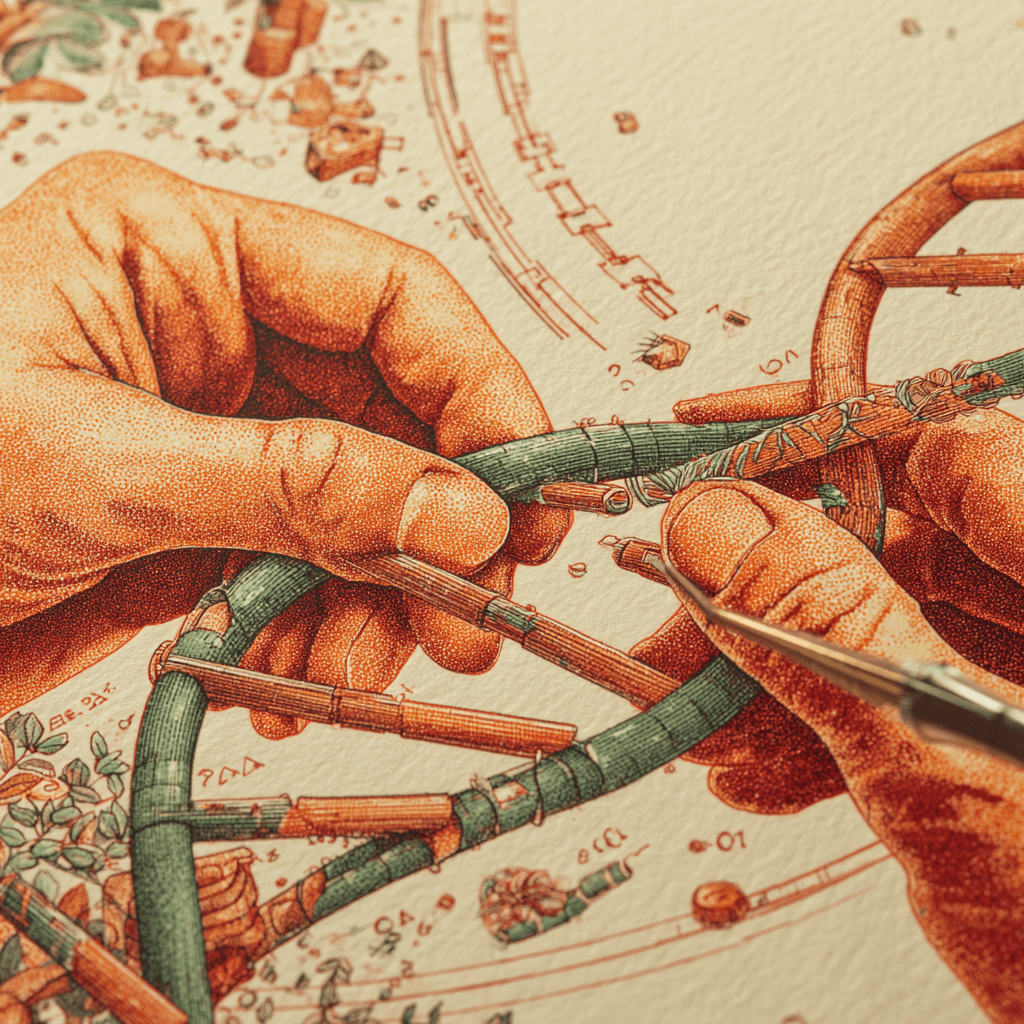
Non-invasive prenatal testing (NIPT) has transformed how we screen for chromosomal conditions during pregnancy. By analyzing fragments of cell-free DNA (cfDNA) circulating in a pregnant person's blood, clinicians can detect conditions like Down syndrome with remarkable accuracy - all from a simple blood draw. But behind every reliable screening test lies a less visible challenge: validation.
How do you prove a test works? You need samples - lots of them - covering every condition the test claims to detect. And for rare conditions, those samples are extraordinarily hard to come by. This is where synthetic cfDNA enters the picture.
What is Cell-Free DNA?
Cell-free DNA consists of short fragments of genetic material floating in the bloodstream. During pregnancy, a portion of this cfDNA originates from the placenta and carries the fetal genome. NIPT works by sequencing these fragments and using computational methods to detect anomalies - extra copies of chromosome 21 (Down syndrome), chromosome 18 (Edwards syndrome), or chromosome 13 (Patau syndrome), among others.
The ratio of fetal to maternal cfDNA (called the fetal fraction) typically ranges from 5-20%, and the fragments follow characteristic size distributions peaking around 166 base pairs. These biological properties are critical to understand because any synthetic version needs to faithfully reproduce them.
The Validation Problem
Current NIPT tests work well for common trisomies, but the field is rapidly expanding. Companies like Natera, with their Fetal Focus single-gene NIPT, are now screening for over 20 monogenic conditions. BillionToOne's UNITY test covers single-gene disorders using a different molecular approach. Each new condition added to a screening panel needs validation data.
Here's the problem: for a condition affecting 1 in 50,000 births, accumulating enough positive clinical samples for robust validation could take years. Ethical constraints on sampling pregnant populations add another layer of difficulty. And even when samples exist, cfDNA degrades quickly - you can't stockpile it indefinitely.
The result is a bottleneck. Promising tests sit in development pipelines waiting for enough validation data to satisfy regulatory requirements and clinical confidence thresholds.
How Synthetic cfDNA Works
Synthetic cfDNA is computationally generated sequencing data that mimics real maternal-fetal cfDNA mixtures. It's not a simple copy-paste of genomic sequences - it's a sophisticated simulation that captures the biological properties that make cfDNA unique:
- Fragment size distributions - Fetal and maternal fragments have different size profiles. Synthetic data must reproduce these accurately, including the characteristic peaks and the subtle differences between fetal and maternal patterns.
- GC content bias - Sequencing technologies introduce biases based on the GC content of DNA fragments. Realistic synthetic data incorporates these platform-specific artifacts.
- Fetal fraction modeling - The proportion of fetal DNA can be precisely controlled in synthetic mixtures, enabling systematic testing across a range of clinically relevant fetal fractions.
- Genomic variants - For single-gene disorder screening, synthetic data must include specific pathogenic variants at the correct allele frequencies, embedded within a realistic cfDNA background.
Modern approaches to generating synthetic cfDNA increasingly leverage machine learning - training generative models on real cfDNA datasets to produce outputs that are statistically indistinguishable from genuine clinical samples. Eabha is building this next generation of synthetic cfDNA tools, combining deep generative models with domain expertise in prenatal genomics to produce validation-ready datasets for the screening labs that need them most.
Why This Matters for NIPT
Synthetic cfDNA addresses several critical needs simultaneously:
Scalable validation. Labs can generate thousands of synthetic samples covering any condition, any fetal fraction, any variant - on demand. No more waiting years to accumulate rare positive cases.
Standardized benchmarking. One of the biggest gaps in prenatal screening is the lack of standardized reference materials. Unlike fields such as oncology, where reference standards exist for many assays, NIPT has no widely accepted benchmarking datasets. Synthetic cfDNA can fill this role, giving labs and regulators a common baseline for comparing test performance.
Edge case testing. Real-world clinical samples rarely cover the challenging scenarios where tests are most likely to fail - very low fetal fractions, mosaic conditions, unusual genomic backgrounds. Synthetic data can be designed to stress-test algorithms precisely in these scenarios.
Regulatory pathways. As regulatory bodies like the FDA and EU IVDR frameworks increasingly scrutinize NIPT claims, having robust validation datasets becomes essential for market access. Synthetic data doesn't replace clinical validation entirely, but it can supplement it significantly - particularly for rare conditions where clinical data will always be sparse.
The Road Ahead
The prenatal screening field is at an inflection point. The technology to screen for hundreds of conditions from a single blood draw is within reach, but the validation infrastructure hasn't kept pace. Synthetic cfDNA represents a practical solution to this gap - not as a replacement for clinical data, but as a powerful complement that can accelerate the development and validation of next-generation screening tests.
As genomic AI models become more sophisticated and our understanding of cfDNA biology deepens, the quality and utility of synthetic data will only improve. The labs and companies that invest in these approaches now will be best positioned to bring broader, more accurate prenatal screening to clinical practice. To learn more about how synthetic cfDNA is being built for real-world validation, visit eabhaseq.com.